Is there a remedy for stress, overtime and duplicated work?
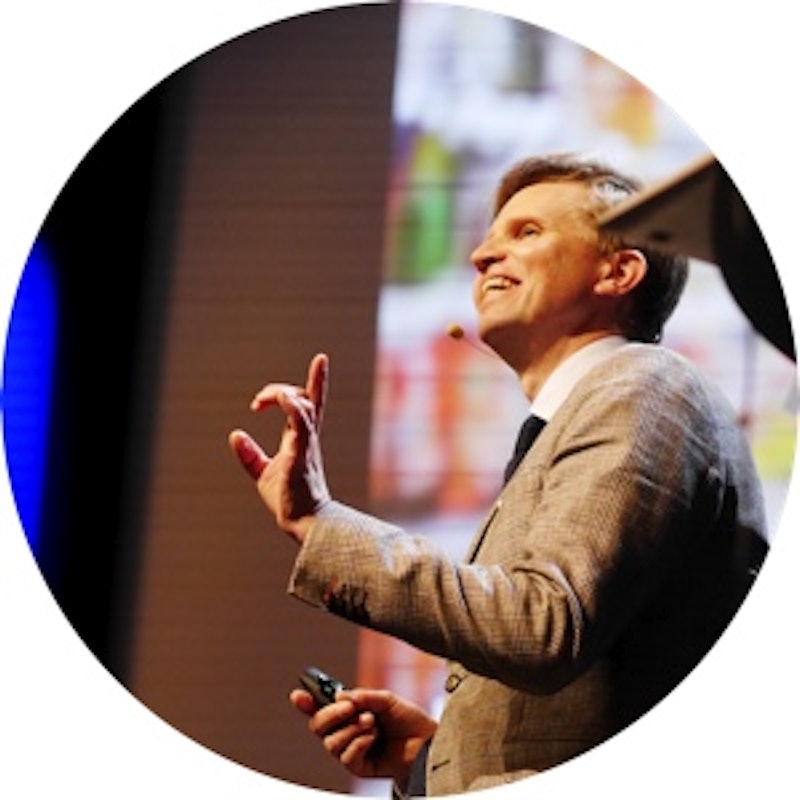
If you ask me, David Stiernholm – a struktör – the answer is yes. Finding ways to work efficiently and feel better is definitely an achievable goal. Do you need more structure in your everyday life? Do you want to prevent stress?
In my talk on personal productivity through good structure, I give you the tools to organize, focus and automate. That way, you get more time for what is important – for you and for your organization.
This is what you will learn
Structure is neither difficult nor boring. After this 45 – 90 minute talk with me, you will:
- know how you should prioritize, structure and focus your work
- be able to get more done in less time (and hence have more time for other, more important matters)
- no longer need to be stressed over all the things you have to do
- be at least one step closer to becoming and being more structured
- want to get started immediately with simplifying your daily work
My broadest talk
In terms of content, this is my broadest talk, in the sense that I share tips and tricks from across the whole subject of structure at work. If you want to be sure that every participant leaves with several ideas that will improve their working days, this is the talk to choose.
Light-hearted and concrete about structure
As a speaker, I combine refreshing thoughts with practical tips and humor. The concrete tips for personal productivity are ones you can start using immediately – both at work and in your daily life.
You will soon notice how you are becoming more structured and able to work more efficiently. The content is continuously updated to connect with new technology (such as AI!) and new ways of working. Contact me, and I will tell you more and we can book a talk.
I want to contact David about the talk “Get super structured”
No boring finger-wagging
Participants at my talks often tell me afterwards that they expected the talk to be boring and to be served dreary finger-wagging, but that they found it fun instead. They were inspired, and now, afterwards, they feel hope and eagerness to get started with structuring.
Of course! Structure is fun, and it makes things simpler!
On-site or online – both work fine
I can give the talk on-site at your premises or online, remotely, in Zoom, Teams, Google Meet or whichever video meeting tool you prefer.
What do others say?
Here is what some customers who have booked the talk before say:
“…out of all the speakers who have been with us, you are the one who has specifically given us the most tools and value, which was evident in the evening’s discussions. You are really good and I like your style of lecturing, interacting with the audience through both humor and quick-witted follow-up questions!”
- Pierre Lindmark, CEO & Founder, Winningtemp
“We hired David Stiernholm for our Spring Summit, which included employees from six different countries. David spoke about ‘How to Get Superstructured.’ It was a very inspiring and engaging lecture. Afterwards, many of us felt eager to start becoming superstructured right away! Highly appreciated!”
- Britta Patriksson, Director Human Resources, The Swedish Club
A book to support every participant

What more could you ask for? Well, perhaps an equally practical book about structure. I have written one. The talk is based on my award-winning book Super Structured: How to overcome chaos and win back time. If you book the talk, you can buy books so that every participant gets a signed copy to take home.
I want to contact David about the talk "Get super structured"
Frequently asked questions
“Who is the talk suitable for?”
Of all my talks, this is the one with the “broadest” content, which means that everyone leaves with at least one or several ideas they can start using immediately – practically regardless of what they work with. I often give this talk at small and large companies, at universities and colleges, and in municipalities, regions and government agencies.
The only people the talk is not suited for are those in professions where you don’t plan your own work but simply do what you are assigned, for example warehouse pickers, couriers, production staff and the like.
“How do I book a talk?”
This is how it works:
1. You contact me and ask for more information, for example about the price.
2. I send you a proposal showing what the talk costs, which dates I am available and what you can add to get even more impact from the talk.
3. When you accept my proposal, I book the date for you. You can cancel or reschedule completely free of charge up until four weeks before the date of the assignment.
4. You receive a formal confirmation from me, which you sign digitally – quick and easy.
5. We schedule a half-hour preparatory online meeting where we talk more about your needs and your organization’s circumstances, so that I can tailor the content of the talk to suit you.
6. If you have ordered books for the participants, I send them in advance so that they are in place when the talk takes place.
7. Right after the talk, I invoice the fee and any travel expenses.
8. After the talk, the participants can email me as many questions as they like, for as long as they like. I answer them at no extra cost. It’s included.
“Is the talk interactive? Can you ask questions, or is it a monologue?”
Yes, the talk I give is definitely interactive. I really like it when participants ask questions during the talk (I like objections too, if there are any). I also ask the participants a few questions myself here and there, so it is always a dialogue.
5 tips for more structure in everyday life

As a little taster, here are five quick structure tips you get right now:
1. A to-do list for order and clarity
Choose a tool for your to-do list (digital or physical) that suits you, your personality and your work situation. What is right for you is not necessarily the same as what your colleagues choose.
2. Set aside time and schedule events in your calendar
In your calendar, schedule things that are tied to a specific time (for example meetings and other things you have to do at a certain time), and put everything else in your to-do list – even if it has to be done on a certain date.
3. Get an overview and organize your digital documents
Make a map of where you keep your digital documents – and why those particular documents should be stored in that particular place.
4. Structure your email inbox
Get an empty inbox every now and then by saving emails you need to keep somewhere other than directly in the inbox.
5. Prioritize right!
Clarify for yourself what determines whether a task is important or not, so that you can prioritize deliberately. Only then can you tell the difference between what is important and what is urgent.
I want more. I want to send a request! Thanks for the tips; give me more.