
Decide what doesn’t need to be done now
Datum: 2026-10-06 09:37
There’s always so much to do. Or is there?
That something “can be done” is not the same as that it “should be done.” And “should be done” is not necessarily the same as “must be done now.”
For you who prefer listening to reading, this post is also available as an episode of the ""Done!"" podcast:
From thought to list, fast
When your structure is in place, with one clear place (ideally just one) to note all your tasks, it becomes easy to add new to-dos as they come to mind. Personally, I have an extremely short path from the thought that I should do something to it ending up on my to-do list.
This makes the list long. It includes everything I’ve come up with over time that should, must, or could be done. You may not come close to finishing everything and may feel burdened by it all, especially right now.
A broken ship
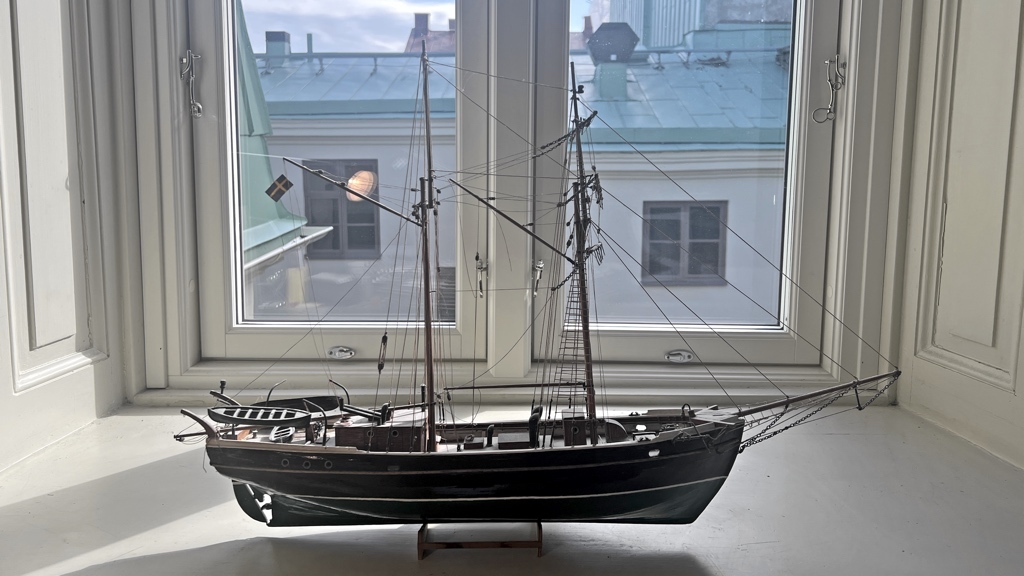
My father built wooden ship models. I lost him very early, and when my brother and I cleaned out our childhood home, I naturally kept the remaining models. The Danish ship “Lilla Dan” was a bit worn. Several lines had snapped and were hanging loose. I thought, “I have to fix that,” and added it to the slightly heavier list of things that need to be taken care of. Phew.
Then I stopped myself. It dawned on me that the model doesn’t need to be repaired right now, or even anytime soon. Fixing a wooden model isn’t something I need to focus on at this stage in life. It’ll be perfect to do later, when I’m older and less mobile, if I even want to then. Lilla Dan isn’t going anywhere.
Now I keep the broken model in the window nook in front of my desk at work. It’s a constant reminder that just because something can be done, it often doesn’t have to be done right now.
Do this
If things are hectic and your workload feels heavy,
- Skim through your to-do list and look for tasks that don’t absolutely have to be done now (even if you could do them now, if only you had time).
- If they have a deadline that’s more a hope than a firm commitment, remove it and let the task remain “floating.”
- If you realize the tasks are optional enough that it’s not even certain they need to be done at all, move them to a “Someday” list or tag them “Someday, if you want” to keep them within the same project or theme.
- Find tasks marked as “ASAP” that you can instead move to a more precise “later”, in three months, for example, then assign either a firm due date or a fuzzy deadline like “before year-end” (or “in old age, fix Lilla Dan”).
A relief in a heavy time
When you decide what doesn’t have to be done now, your unnecessarily heavy workload becomes lighter. You have less hanging over you, and more often than before, you can feel caught up and done for now. During an intense period like this, that’s a relief.
What about you?
What tricks do you use to ease your workload when it’s too much? Write to me and share. Naturally, this is a structural aspect that affects most of the people I help, so I’d love to hear what works for you.
(Another tip when you are up to your neck in work and the to-do list is long, is to do short tasks first!)
There is more!

If you want more tips on how to create good structure at work, there are many ways to get that from me - in podcasts, videos, books, talks and other formats.
Share: